AC LABS.
AC LABS.

Understanding the
Overstimulated Mind.

A clinical analysis of the downshift failure driving night-time hyperactivation.

The Transition Bottleneck.

Your profile does not indicate an inability to sleep. It reveals a mechanical failure in the transition phase.

The primary barrier to rest is not a lack of physical exhaustion, but excessive neurological activation. You arrive at night with a nervous system still actively processing and anticipating.

"The issue is not being too awake. The issue is failing to downshift cleanly."

When the downshift from daytime alertness to low-frequency rest fails, sleep stops being a biological default and becomes a forced effort.

TRANSITION THRESHOLD LIGHTS OUT + 2 HOURS THE BOTTLENECK Healthy Downshift Overstimulated Profile Late Drop
SYMPATHETIC DOMINANCE

When the Brain Stays On.

Your nervous system remains locked in sympathetic dominance. The physiological signals to power down simply haven't registered, leaving your brain in a state that fundamentally opposes sleep.

The Compounding Effect

Without a clear physiological off-switch, accumulated high-frequency activation carries directly into the night.

This manifests as endless mental loops and an inability to disengage. It is a state problem, not a discipline problem.

The Cost of Forcing Sleep.

The most common response to hyperactivation is force: commanding sleep, monitoring the clock, and calculating lost hours.

Key Insight

Sleep cannot be forced. Pressure and self-monitoring demand cognitive processing, which actively increases arousal.

The objective is not to "win" against sleep, but to reduce internal activation before the sleep window begins. Lowering physiological pressure is the first step toward true rest.

SLEEP THRESHOLD MOMENT OF EFFORT Passive Release Hyperarousal CORTISOL RESPONSE THE EFFORT PENALTY

How the Downshift Begins.

Reducing hyperactivation requires a structured transition protocol. The goal is to guide your nervous system from peak performance to absolute recovery.

01

Create the Boundary

Establish a firm line between day and night mode. The brain requires distinct physiological cues to halt active processing.

02

Reduce Noise

Shift away from complex problem-solving. This isn't about feeling tired; it's about intentional cognitive downshifting.

03

Signal Safety

Deploy routines that communicate stillness, shifting the nervous system from sympathetic dominance into parasympathetic readiness.

ENTRAINMENT

Supporting the Transition.

Your nervous system naturally resists the shift into parasympathetic recovery. Chemical interventions force sedation, completely ignoring this underlying frequency mismatch.

Cranial Electrotherapy Stimulation (CES)

By delivering sub-sensory microcurrents at the Alpha frequency (8-13Hz), CES mechanically entrains the brain away from hyperarousal.

CES is not a sedative; it is structural support. It provides the precise physiological signal required to lower your cognitive baseline and initiate rest.

Explore AC-SS™ (v2.0) - FDA Cleared CES Device

AC-SS™ (v2.0) —
Precision for the Overstimulated Mind.

An FDA-cleared cranial electrotherapy stimulation device, precision-calibrated for your specific neurological profile.

01

Alpha entrainment (8–13 Hz). Sub-sensory microcurrents deliver the precise frequency your brain cannot reach organically.

02

Non-chemical. No dependency, no tolerance buildup, no morning fog. True mechanical intervention.

03

FDA cleared. Clinically validated for insomnia and anxiety. Supported by rigorous peer-reviewed research.
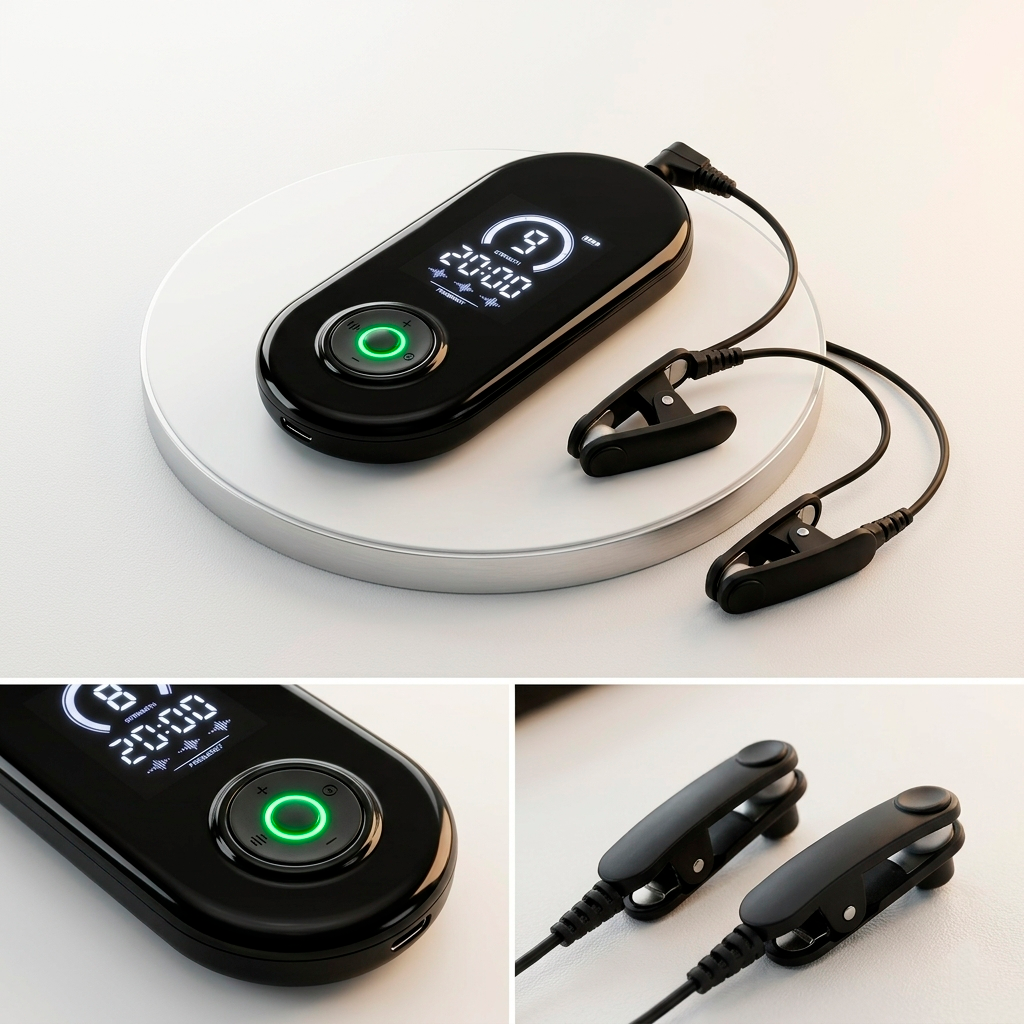
Explore AC-SS™ (v2.0) - FDA Cleared CES Device
AC-SS™ v2.0 CES Device

Rest, Reframed.

The problem is not a lack of exhaustion. It is a failure to switch off.

Sleep is an output. Restoring your sleep architecture requires a clean downshift, a lower cognitive baseline, and absolute physiological boundaries.

True recovery is engineered through precision and intent.

AC LABS.
01 / 08