Understanding the
Rhythm Disrupted.
A clinical analysis of the circadian instability behind sleep that has lost its anchor.
The Rhythm Problem.
Your profile reveals a failure not in sleep itself, but in its surrounding conditions: the absence of a stable timing pattern.
You can sleep, but your schedule denies your circadian system a reliable signal to build on. Without predictable timing, your body cannot synchronize for the night ahead.
This structural instability compounds. Each inconsistent night makes regulation harder, turning cumulative drift into the core problem.
How the Circadian System Fails.
Your circadian rhythm is a 24-hour master clock governing melatonin release, core temperature drops, and deep sleep readiness.
The Desynchronization
When this clock receives inconsistent input—variable wake times, irregular light, shifting bedtimes—it cannot anticipate the night. Hormones drift, temperature cycles flatten, and the nervous system arrives at bedtime unprepared.
This is not traditional insomnia. It is a body perpetually out of phase with its own sleep architecture.
The Forces That Prevent Alignment.
Circadian disruption is the cumulative result of timing signals actively preventing your internal clock from stabilizing.
Key Insight
Variable bedtimes, weekend sleep-ins, and shifting routines keep the circadian system chronically disoriented. The clock never settles.
Social jet lag is a measurable physiological phenomenon that compounds with every misaligned day.
Anchoring the Rhythm.
Restoring circadian stability requires providing consistent, predictable timing signals your internal clock can build on.
Fix the Wake Time
A consistent wake time is the most powerful circadian anchor. Lock it within a 30-minute window, seven days a week.
Front-Load the Light
Morning light within the first hour of waking is the primary signal your clock uses to calibrate the 24-hour cycle.
Eliminate the Drift
Remove schedule variability. Late nights and weekend compensation are active inputs that sustain chronic disorientation.
Stabilizing the Baseline.
Circadian disruption leaves the nervous system chronically unsettled. Re-establishing a stable rhythm requires both behavioral consistency and physiological support.
Cranial Electrotherapy Stimulation (CES)
Alpha-frequency microcurrents (8-13Hz) establish a calmer neurological baseline, reducing the internal noise that hinders circadian re-alignment.
CES acts as a stabilizer, not a clock-setter. It mechanically reinforces the physiological conditions necessary for a newly anchored rhythm to take hold.
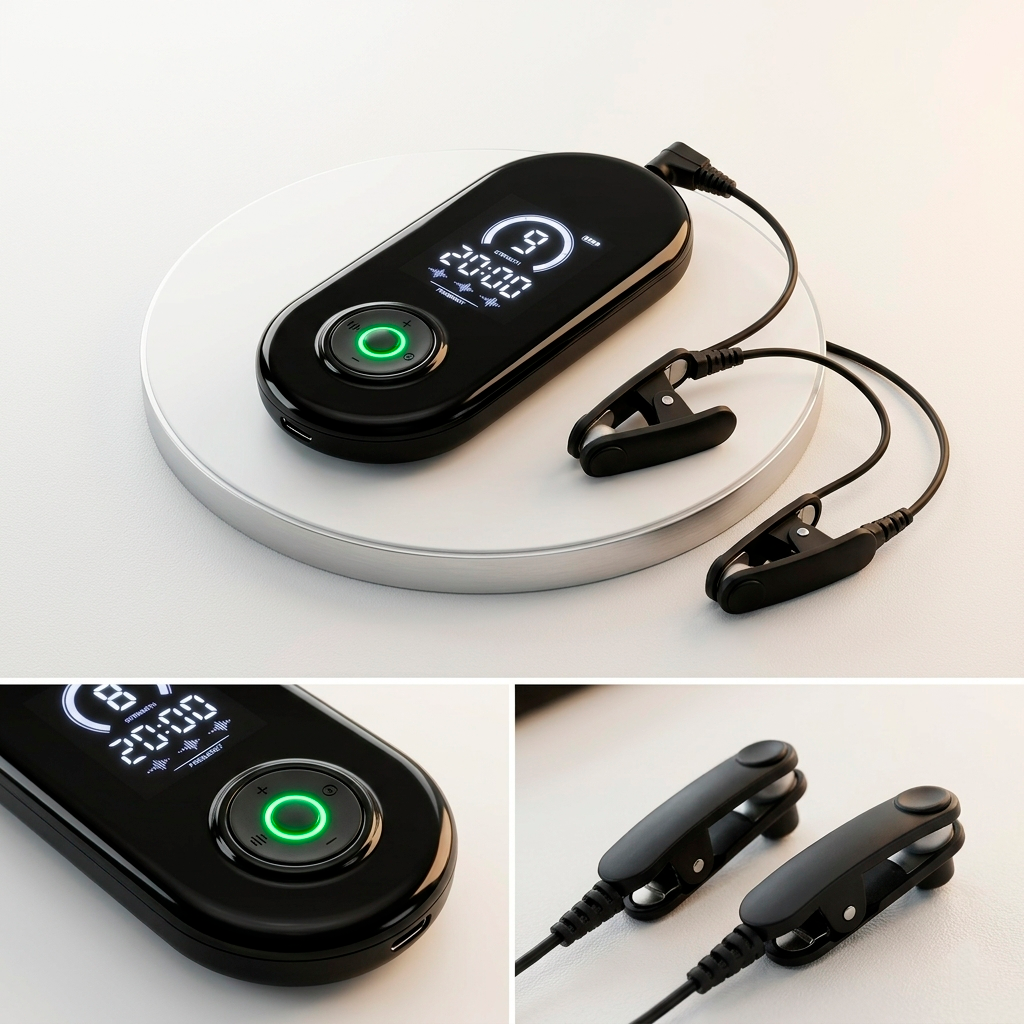
Explore AC-SS™ (v2.0) - FDA Cleared CES DeviceAC-SS™ (v2.0) —
Precision for the Disrupted Rhythm.
An FDA-cleared cranial electrotherapy stimulation device, precision-calibrated for your specific neurological profile.
Alpha entrainment (8–13 Hz). Supports the neurological stability required during circadian re-alignment and rhythm consolidation.
Non-chemical. Zero dependency, tolerance, or morning fog. Pure mechanical intervention.
FDA cleared. Clinically validated for insomnia and anxiety through rigorous peer-reviewed research.
Rhythm, Restored.
Your problem is not a failure of sleep, but a body lacking a consistent schedule to build on.
Recovery begins not with sleeping more, but with sleeping predictably—at the same time, with the same anchoring signals.
Your body cannot recover on a schedule it cannot predict.